
Three by Claude Monet: Sotheby’s Impressionist & Modern Art Evening Sale In New York on 4 November 2014


Sotheby’s will present three remarkable paintings by Claude Monet from an important American collection in its Evening Sale of Impressionist & Modern Art in New York on 4 November 2014. Created in the 1880s and ‘90s, the works trace the evolution of Monet's style as he challenged the limits of High Impressionism and experimented with an approach that would culminate in the Series Paintings of his later years. 
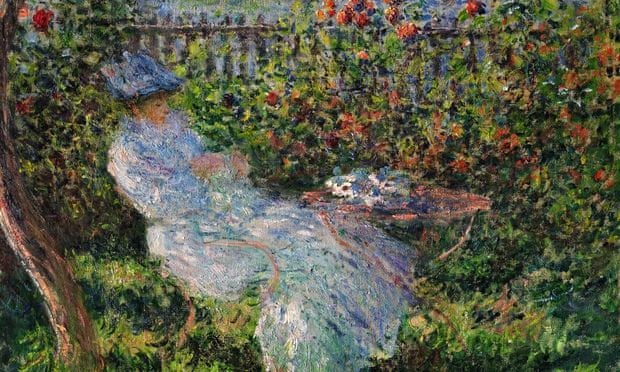


Alice Hoschedé au jardin Painted in 1881
 - Estimate $25/35 million
Monet painted Alice Hoschedé au jardin in 1881 as a new chapter of his life was unfolding. Seated among the flowers is Alice Hoschedé, the artist's 37-year-old lover and the wife of his close friend and patron Ernst Hoschedé. The composition is lavished with all of the hallmarks of a great Impressionist composition, with its vivid color palette, intermingling of the natural elements and interplay of light and shadow.
Monet himself selected Alice Hoschedé au jardin for exhibition in 1889. At the Monet-Rodin show that debuted at the Galerie Georges Petit in Paris, Monet selected one painting for each year of his career between 1864 and 1884, in addition to several more recent works – he chose the present painting to represent his work of 1881. The canvas entered the collection of Catholina Lambert of Patterson, New Jersey in 1891, making it one of the earliest Impressionist pictures to arrive in the United States.


Sous les Peupliers Painted in 1887 - Estimate $12/18 million
Monet’s Sous les Peupliers is among the finest evocations of the French countryside that the artist painted in the 1880s. Its rich surface exemplifies the technical virtuosity Monet had achieved by the end of the decade. The idyllic agrarian subject matter of this work encapsulates the central focus of Monet’s oeuvre towards the end of the 19th century: he divorced himself from painting urban scenes and the banlieue of Paris, and devoted himself fully to his beloved countryside, with it majestic avenues of poplar trees, canals and wheat fields.


Église de Vernon, soleil Painted in 1894 - Estimate $7/9 million
Eglise de Vernon, soleilis the crowning achievement from the artist's series of paintings depicting the tranquil town of Vernon, with its resplendent reflection in the nearby Seine. During the spring of 1894, Monet repeatedly addressed the theme of reflection in his paintings of the Seine. Starting with a few relatively simple views of the river at Port-Villez, before moving downstream to tackle the more varied riverbanks at Vernon, Monet devoted a large proportion of his output that year to the French countryside surrounding his home at Giverny.


Comments

Popular posts from this blog

FREDERIC EDWIN CHURCH at AUCTION

Biography Frederic Edwin Church was born in Hartford, Connecticut, on May 4, 1826, the only son of a wealthy businessman. Although his father hoped he would become a physician or enter the world of business, Church persisted in his early desire to be a painter. In 1842-1843 he studied in Hartford with Alexander H. Emmons (1816-1879), a local landscape and portrait painter, and Benjamin H. Coe (1799-after 1883), a well-known drawing instructor. In 1844 Church's father, at last resigned to his son's choice of a career, arranged through his friend, the art patron Daniel Wadsworth, two years of study with Thomas Cole. Church was thus the first pupil accepted by America's leading landscape painter, a distinction that immediately gave him an advantage over other aspiring painters of his generation. From the first, Church showed a remarkable talent for drawing and a strong inclination to paint in a crisp, tightly focused style. In 1845 he made his...

THOMAS HART BENTON at Auction III - Christie's, Doyle, Bonhams

Biography - Questroyal Fine Art, LLC, New York, New York By Amy Spencer Benton’s paintings were widely loved for their reassuring images of the American heartland during two World Wars and the Great Depression. I. Biography  Thomas Hart Benton is best known for his patriotic murals that heroically depict American life during the first half of the 20th century. Born into a prominent Mid-western family of politicians, Benton grew up moving between rural Missouri and the political arena of Washington D.C.. Rejecting his grooming as a future politician, Benton developed an interest in art at an early age. Despite this rebellion, over the course of Benton’s painting career, his outspoken comments, nationalistic views, and socially charged images, marked him as a politician’s son. At the peak of his career in the 1930s, Benton was a key member of the Regionalist movement along with fellow Midwestern artists, Grant Wood and John Steuart Curry. Thomas Hart Benton was born in ...

Genius and Ambition: The Royal Academy of Arts, London

The Royal Academy of Arts announces the most significant touring exhibition of its Collection in its 246-year history. Genius and Ambition: The Royal Academy of Arts, London opened 2 March 2014 at Bendigo Art Gallery, Australia.  Spanning 150 years of the Academy, the exhibition focuses on a key period of the RA Collection: the so-called ‘long nineteenth century’ from 1768-1918. Comprising 56 paintings, twenty drawings, nine prints, eight historic books, two photographs and two sculptures, the display will also tour to four venues in Japan, between August 2014 – April 2015. Several works in the exhibition have never travelled outside of the UK before, including  Sir Joshua Reynolds PRA’s Theory (1789-90), and Sir Ernest Waterlow RA’s The Banks of the River Loing (1903)   Further highlights of the exhibition include  JMW Turner RA’s Dolbadern Castle (1800),  John Constable RA’s Boat Passing a Lock (1826),  Henry Fuseli RA’s Thor battering the Midgard Serpent...