14 October – 19 December 2014
Victoria Miro Mayfair, 14 St George Street, London W1S 1FE
Victoria Miro Mayfair, 14 St George Street, London W1S 1FE
One of the foremost and most engaging twentieth century American portraitists, Neel produced a body of work that is intimate, casual, personal and direct.
Neel was a keen observer of life, and in addition to her penetrating studies of people, she focused her attention on her surroundings, be it in the form of still life, landscape or impromptu vignette. Within the domestic habitat of her family, animals—especially cats and dogs—were a part of her daily life. As a result, over the course of her career from the 1930s until her death in 1984, we find fascinating examples of works that include or focus on particular animals. This exhibition features a group of paintings and drawings in which Neel captures the character and spirit of people and of animals.
In her animal portrayals as in her other work, Neel responded directly to what was in front of her. With all her subjects, human and animal, Neel had a talent for identifying particular gestures and mannerisms that reveal the singular and unique identities of her sitters.
Neel’s portrayal of animals in her work was varied. In some paintings they were presented in conjunction with a person in a portrait, other times as a vignette of daily life, sometimes they were rendered from memory and occasionally they were presented as an actual, very individual portrait.
In many of these works a human figure is seen with a dog or cat in double portraits that convey a sense of the bond between human and animal.

Eddie Zuckermandel and the Cat shows the titular subject seated behind a table, a small Siamese cat in his lap. The two characters are lit from above, casting their faces in a similar deep triangular shadow.

In Carol and the Dog, the blonde hair, fair skin and pale green dress of the woman contrast with the black fur and deep red eyes of the poodle by her side. In her painting of Lushka, 1974, the dog is clearly the subject of what we would actually call a portrait. Like her paintings of people, Neel presents the dog in a frontal position, looking straight at the artist and the viewer.

In her animal portrayals as in her other work, Neel responded directly to what was in front of her. With all her subjects, human and animal, Neel had a talent for identifying particular gestures and mannerisms that reveal the singular and unique identities of her sitters.
Neel’s portrayal of animals in her work was varied. In some paintings they were presented in conjunction with a person in a portrait, other times as a vignette of daily life, sometimes they were rendered from memory and occasionally they were presented as an actual, very individual portrait.
In many of these works a human figure is seen with a dog or cat in double portraits that convey a sense of the bond between human and animal.

Eddie Zuckermandel and the Cat shows the titular subject seated behind a table, a small Siamese cat in his lap. The two characters are lit from above, casting their faces in a similar deep triangular shadow.

In Carol and the Dog, the blonde hair, fair skin and pale green dress of the woman contrast with the black fur and deep red eyes of the poodle by her side. In her painting of Lushka, 1974, the dog is clearly the subject of what we would actually call a portrait. Like her paintings of people, Neel presents the dog in a frontal position, looking straight at the artist and the viewer.
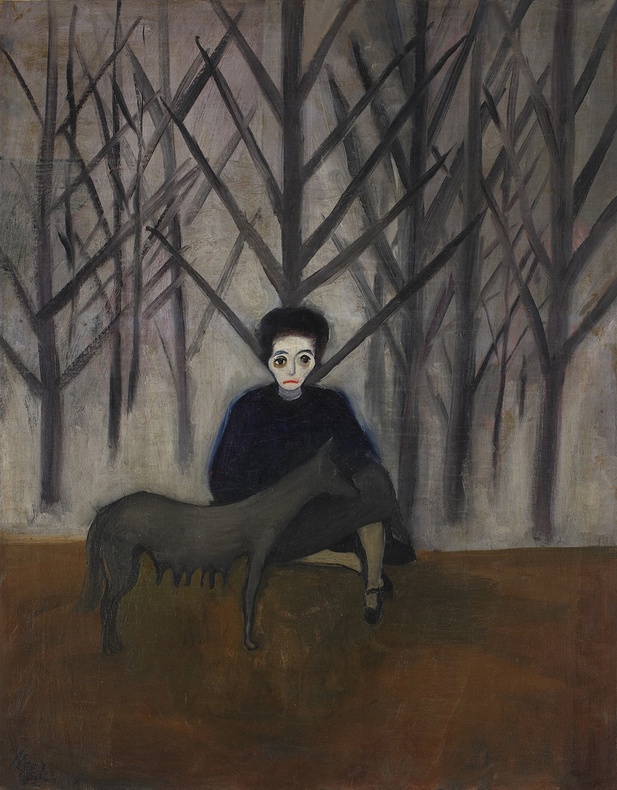
In contrast with these studies from life, Nadya and the Wolf

and Lushka, 1970
have a more enigmatic quality, in which the sitters appear to be taking part in an ambiguous mythological or metaphorical scenario.
Neel’s animals can be seen as human companions, but equally they are characters in their own right, as colourful and specific as the people portrayed by the artist. This exhibition represents a cross-section of this fascinating and diverse body of work.
Recent posthumous solo exhibitions have included Alice Neel: Intimate Relations at Nordiska Akvarellmuseet, Skarhamn (2013); Alice Neel: Painted Truths, a retrospective that toured to the Museum of Fine Arts Houston (2010), the Whitechapel Art Gallery, London (2010) and the Moderna Museet, Malmö (2010-11); Collector of Souls at the Moderna Museet, Stockholm (2008) and Alice Neel, organised by the Philadelphia Museum of Art that travelled to the Whitney Museum of American Art (2000). Her work is in the collections of major museums including the the Art Institute of Chicago; the Brooklyn Museum of Art, New York; the Denver Art Museum; the Milwaukee Art Museum; the Moderna Museet, Stockholm; the Museum of Contemporary Art, Los Angeles; the Museum of Fine Arts, Boston; the Museum of Fine Arts, Houston; the Museum of Modern Art, New York; the Philadelphia Museum of Art; Tate, London and the Whitney Museum of American Art, New York.
Outstanding article, lots more images
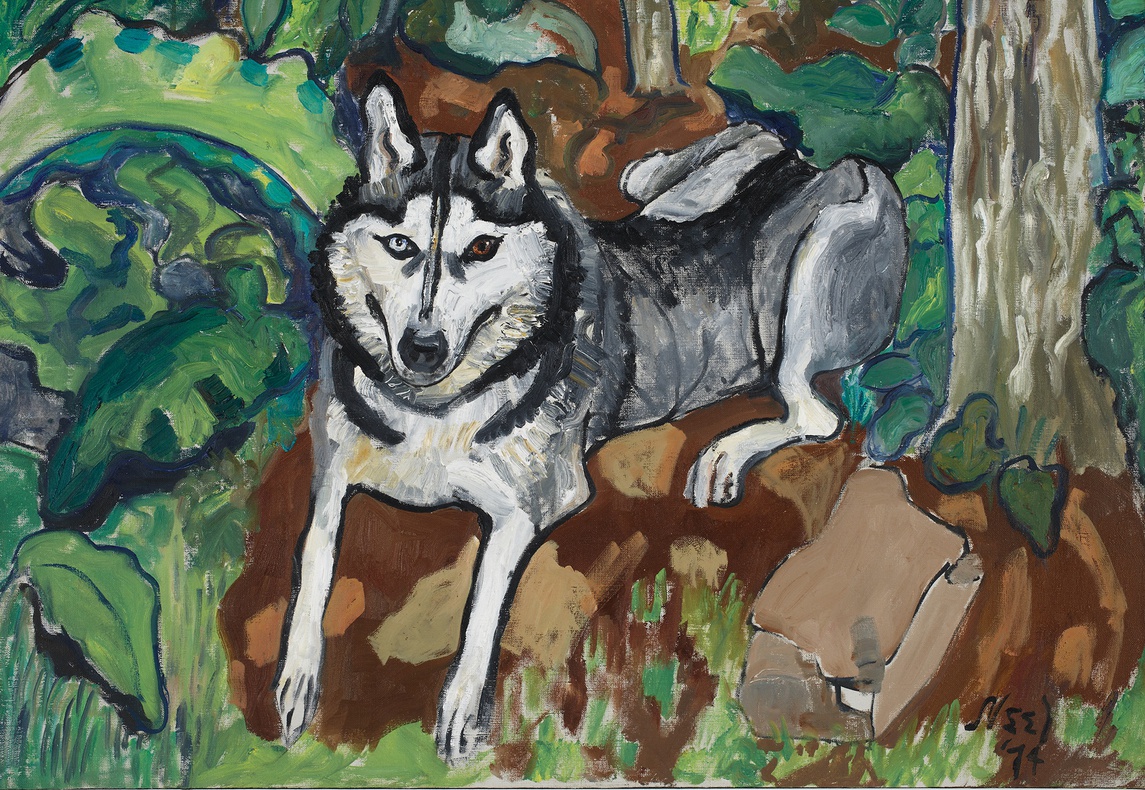
and Lushka, 1970
have a more enigmatic quality, in which the sitters appear to be taking part in an ambiguous mythological or metaphorical scenario.
Neel’s animals can be seen as human companions, but equally they are characters in their own right, as colourful and specific as the people portrayed by the artist. This exhibition represents a cross-section of this fascinating and diverse body of work.
Recent posthumous solo exhibitions have included Alice Neel: Intimate Relations at Nordiska Akvarellmuseet, Skarhamn (2013); Alice Neel: Painted Truths, a retrospective that toured to the Museum of Fine Arts Houston (2010), the Whitechapel Art Gallery, London (2010) and the Moderna Museet, Malmö (2010-11); Collector of Souls at the Moderna Museet, Stockholm (2008) and Alice Neel, organised by the Philadelphia Museum of Art that travelled to the Whitney Museum of American Art (2000). Her work is in the collections of major museums including the the Art Institute of Chicago; the Brooklyn Museum of Art, New York; the Denver Art Museum; the Milwaukee Art Museum; the Moderna Museet, Stockholm; the Museum of Contemporary Art, Los Angeles; the Museum of Fine Arts, Boston; the Museum of Fine Arts, Houston; the Museum of Modern Art, New York; the Philadelphia Museum of Art; Tate, London and the Whitney Museum of American Art, New York.
Outstanding article, lots more images
Comments
Post a Comment